


Due Diligence for Companies: What You Must Check Before Signing a Contract
Due diligence for companies is the process of checking whether a potential counterparty is reliable enough before signing a contract. In B2B trade, many costly problems begin long before the first missed payment or supply failure. They usually start with weak verification, incomplete background review, or a poor understanding of the company behind the deal.
That is why due diligence for companies matters at the contract stage. Before committing to a new relationship, businesses need to understand who they are dealing with, whether the company is financially stable, and whether the proposed terms create a level of exposure they can realistically manage. A structured business information report can support that review by giving teams a clearer view of the company before the agreement is signed.
Why due diligence matters before signing a contract
A contract can define rights and responsibilities, but it does not remove business risk. If the wrong counterparty is approved, collection difficulties, legal disputes, delayed performance, or supply disruption may still follow. This becomes even more important when the agreement involves extended payment terms, recurring orders, large contract values, or dependency on a critical supplier.
Effective due diligence for companies helps businesses answer one essential question before signature: is this company suitable for the commitment being considered? To answer that properly, the review should cover legal standing, financial strength, payment reliability, and the wider commercial profile of the counterparty.
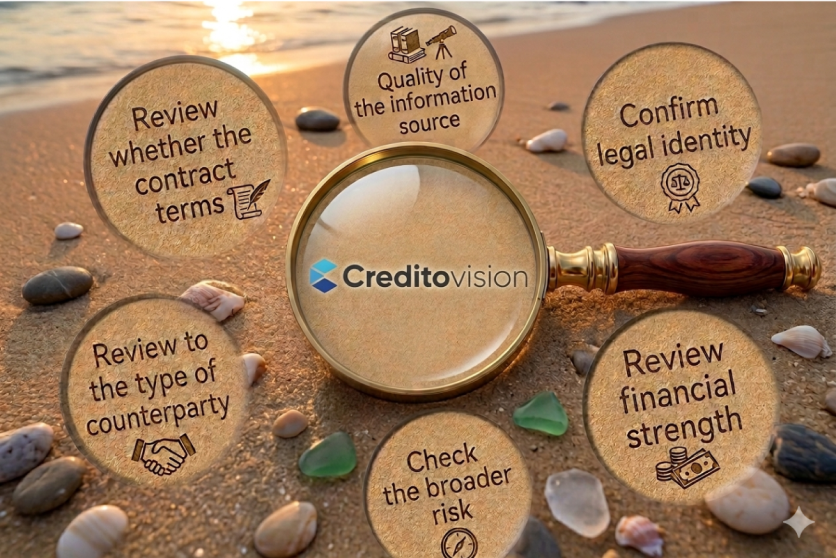
1. Confirm legal identity and signing authority
The first step is to verify that the company exists, is active, and is legally able to enter into the agreement. Businesses should confirm the registered name, legal status, ownership structure, operating address, and the authority of the person signing the contract.
A reliable business information report can be especially useful here because it helps decision-makers review verified company background rather than relying only on declarations from the counterparty. At this stage, due diligence is not just administrative. It is about reducing the risk of signing with the wrong entity, or with a party whose legal authority is unclear.
2. Review financial strength before extending exposure
A company may be legitimate and still be a weak contractual partner. That is why financial review is a core part of due diligence for companies, especially when the agreement involves deferred payment, customer credit, or any form of commercial trade credit.
A proper business credit report helps determine whether the counterparty appears capable of meeting its obligations under the proposed terms. If the contract value is meaningful, businesses should also consider whether the company’s financial profile is strong enough to support that level of exposure over time. This is where sound credit analysis becomes essential. The issue is not simply whether the company looks active, but whether it has the resilience to perform under the contract being signed.
3. Check the broader risk picture
Financial review alone is not enough. Companies should also assess legal issues, structural changes, operating stability, and other warning signs that may affect performance or payment behavior.
A company credit report can help by bringing together wider risk indicators in a more structured way. It supports a more realistic credit risk check by showing whether the company’s overall profile is consistent with the confidence level the contract requires. In practice, this can reveal whether the counterparty appears stable, inconsistent, or more fragile than it first seemed.
4. Match the review to the type of counterparty
Not every contract creates the same kind of risk. A customer contract usually creates receivables exposure. A supplier contract may create continuity, delivery, or dependency risk. Good due diligence should reflect that difference.
For customer-side relationships, a customer risk check helps determine whether payment terms, credit limits, and contract size are reasonable. For supplier-side relationships, supplier risk assessment becomes more important when the vendor is hard to replace, operationally important, or closely tied to service continuity. In other words, businesses should assess not only who the counterparty is, but also what kind of damage a problem in that relationship could create.
5. Review whether the contract terms fit the company’s profile
A strong due diligence process should always connect company risk to contract structure. Even a generally acceptable company may become a weak partner if the terms are too aggressive for its profile.
Before signing, businesses should consider whether:
- the payment terms are too long for the company’s apparent strength,
- the contract value is too large relative to the counterparty’s scale,
- dependency on the supplier is too high,
- or the proposed exposure would become difficult to control if conditions change.
This is often where better judgment matters most. A company may pass basic verification, but the relationship can still be too risky if the contract is poorly aligned with the counterparty’s actual capacity.
6. Use online reporting as an early screening tool
In practice, many teams begin with an online business credit report because speed matters. That can be a useful first step when internal teams need quick visibility before the contracting process moves forward.
However, early screening should not be confused with full due diligence. Fast access to information is most valuable when it leads to a more informed review, especially in higher-value or more sensitive contracts.
7. Consider the quality of the information source
The strength of due diligence depends heavily on the source behind it. Information from business credit reporting agencies can support more consistent screening, especially when the reporting is current, relevant, and structured for decision-making. The objective is not simply to gather more data, but to use dependable information that helps the business decide whether the counterparty is suitable for the contract being signed.
8. Keep reviewing risk after signature
A good pre-contract review is essential, but risk can change after onboarding. A company that appears stable at signing may weaken later because of payment pressure, legal developments, or market conditions.
That is why ongoing review matters after signature as well. In supplier relationships, supplier monitoring can help businesses detect developing issues before operational disruption becomes serious. In customer relationships, periodic customer risk monitoring can help ensure that the original decision still fits the current risk profile.
What strong due diligence achieves
When done properly, due diligence for companies helps businesses sign contracts with a clearer view of risk, capacity, and commercial credibility. It improves approval discipline, supports more realistic contract decisions, and reduces the chance of entering relationships that later become expensive to manage.
Most importantly, it helps businesses judge whether the counterparty is suitable not only in principle, but under the actual terms being negotiated.
Conclusion
Due diligence for companies is most valuable when it helps businesses understand what they must check before signing a contract, not after problems begin. When identity verification, financial review, contract-fit analysis, and practical risk judgment are brought together, companies can make better decisions with greater confidence. To support your due diligence process with a structured business credit report, reliable company information, and practical company intelligence before contract signature, visit the Creditovision portal: https://portal.creditovision.com/login