Vendor Risk Check: How to Choose Reliable Business Partners

A vendor risk check helps businesses choose reliable partners before contracts are signed, supply chains become dependent, or financial exposure starts to grow. A structured review helps reduce disruption, detect hidden weaknesses, and support better supplier decisions before risk becomes costly.
Many companies still choose suppliers mainly based on price, speed, or familiarity. But a vendor that looks attractive at the start can become a long-term problem if it lacks financial stability, has unclear ownership, or shows signs of operational weakness. That is why vendor selection should be supported by proper review, not only by commercial instinct.
Why a Vendor Risk Check Matters
A supplier is often more than a seller. In many cases, it becomes part of your delivery chain, customer promise, and working capital exposure. If that supplier fails, the impact can quickly spread into operations, service quality, and cash flow.
A strong vendor risk check helps businesses:
- reduce the chance of supply disruption
- identify financially weak or unstable partners
- detect hidden legal or structural risk
- support better approval and contract decisions
- reduce dependency on unsuitable suppliers
This matters even more when the relationship involves critical goods, long-term service support, international trade, or limited replacement options.
Reliable Business Partners Are Not Chosen by Price Alone
The lowest price rarely tells the full story. A vendor may offer attractive terms while facing cash flow pressure, poor internal controls, or unresolved legal issues in the background.
Reliable business partners usually show strength across several areas at once: legal clarity, financial resilience, payment discipline, and the operational ability to deliver consistently. That is where supplier risk assessment becomes valuable. It gives decision-makers a more realistic basis for choosing who they want to rely on.
What a Proper Vendor Risk Check Should Include
A good review should be practical, proportionate, and relevant to the size of the relationship. It does not need to be unnecessarily complex, but it should cover the factors that directly affect reliability.
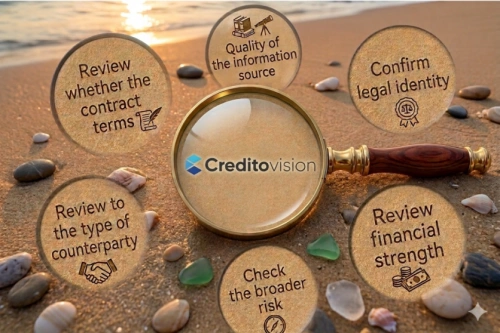
1. Business verification and legal identity
The first step is confirming that the company legally exists and that the entity being reviewed is the one you actually plan to contract with.
This part of business verification usually includes:
- legal company name
- registration details
- active or inactive status
- registered address
- directors or authorized representatives
- ownership or group links where relevant
This may sound basic, but identity errors can become expensive later, especially in fast-moving or cross-border transactions.
2. Financial strength and company financial reliability
A supplier does not need to be perfect, but it should be stable enough for the level of dependency you expect. Reviewing company financial reliability helps determine whether the vendor can support the relationship over time, not just at the point of onboarding.
Useful indicators often include:
- revenue trend
- profitability pattern
- leverage level
- liquidity position
- working capital pressure
- filing regularity
- signs of deterioration or financial stress
This is often where a business information report or company information report becomes useful, as it provides a more structured view of the business behind the offer.
3. Credit risk check and payment discipline
A vendor may still be trading while showing weaker payment behavior or declining credit quality underneath. A credit risk check helps businesses identify these warning signs before their own exposure increases.
When available, useful signals include:
- delayed payment patterns
- worsening payment habits
- elevated risk indicators
- reduced ability to absorb financial pressure
- signs of stress in commercial obligations
For companies that depend on continuity, this part of the review is especially important because commercial relationships often break down gradually before they fail visibly.
4. Ownership, legal events, and company intelligence
A vendor can appear credible on the surface while carrying risk in the background. Ownership opacity, frequent structural changes, legal disputes, enforcement actions, or insolvency-related events can all affect long-term reliability.
This is where due diligence and broader company intelligence matter. The goal is not to reject every company with a negative signal, but to understand whether an issue is isolated, manageable, or part of a wider pattern.
5. Operational fit and dependency risk
Some suppliers create risk not because they are obviously weak, but because they become too important to replace. Even a financially acceptable vendor can create problems if your business becomes overly dependent on it.
Ask practical questions such as:
- How critical is this supplier to daily operations?
- Is there a realistic backup option?
- How quickly could the business recover from disruption?
- Would supplier failure affect customers, revenue, or internal delivery?
A company may be suitable for limited use but too risky for strategic dependency. That distinction is a key part of effective risk assessment and practical risk management.
Common Red Flags in a Supplier Risk Check
A useful supplier risk check helps detect early warning signs before they become expensive problems. Common red flags include:
- inconsistent company details
- missing or delayed financial filings
- weak ownership transparency
- repeated legal or adverse events
- visible signs of financial pressure
- unrealistic promises compared with company scale
- reluctance to provide standard onboarding information
One weak signal does not always mean “do not proceed.” But several weak signals together usually justify tighter controls, reduced exposure, or closer monitoring.
Vendor Risk Check as Part of Risk Management
A vendor review should not be treated as a standalone onboarding task. It should support wider risk management decisions across procurement, finance, and commercial operations.
Depending on the findings, companies may decide to:
- approve the vendor under normal conditions
- approve with lower limits or tighter controls
- request additional documents
- reduce the initial order size or contract length
- increase post-onboarding review
- avoid the relationship if the risk is disproportionate
This is where a vendor risk check becomes commercially useful. It does not just describe risk; it helps shape better decisions.
Why Supplier Monitoring Matters After Onboarding
A vendor that looks stable today may not look the same six or twelve months later. Ownership can change, financial conditions can weaken, and legal events can emerge after the contract is signed.
That is why ongoing supplier monitoring matters, especially for critical suppliers, international vendors, and long-term service relationships. In practice, the strongest vendor risk frameworks do not stop at onboarding. They continue reviewing partner risk as exposure grows.
FAQ
What is a vendor risk check?
A vendor risk check is the process of reviewing a supplier’s legal, financial, structural, and operational reliability before or during a commercial relationship.
Why is supplier risk assessment important?
Supplier risk assessment helps businesses reduce disruption, detect hidden weaknesses, and avoid becoming dependent on unstable or unsuitable partners.
What should a vendor review include?
A vendor review should typically include business verification, financial review, credit risk signals, ownership analysis, legal events, and dependency risk.
Conclusion
A vendor risk check helps businesses choose reliable partners with more confidence and fewer assumptions. It brings structure to decisions that might otherwise rely too heavily on price, speed, or surface-level impressions.
When companies combine business verification, financial review, credit risk signals, and practical supplier risk assessment, they make stronger decisions before problems become expensive. That is what turns vendor review into a real business advantage: better partners, better protection, and fewer surprises over time.
For a more structured view of company risk and business information, you can access our portal here: https://portal.creditovision.com/login